1 min read

What is a Flywheel?

The flywheel on a Briggs & Stratton small engine was originally developed to maintain constant angular velocity of the crankshaft. Simply, it stores the momentum from combustion to keep the crankshaft turning in between the engine's power strokes. The flywheel stores energy when torque is applied by the energy source, and it releases stored energy when the energy source is not applying torque. 

Today, the fins on flywheels act almost like fans, cooling the engine by distributing air around the engine block. Learn more about the cooling systems on Briggs & Stratton engines. The flywheel fins also blow air across the air vane on the engine governor, keeping it running steadily and consistently at your desired speed. 

The modern flywheel now acts as the heart of your portable generator, snow blower, or lawn mower electrical system with magnets mounted around it that make ignition possible. 

Finally, if a lawn mower or tiller blade hits a rock or curb, the flywheel key can sometimes absorb the damage, reducing repair costs significantly. Always check for damage by removing the flywheel to inspect the key and the keyway, the key's slot on the crankshaft. The soft metal key must eliminate play between the flywheel and crankshaft.

Want to learn more about the flywheel on a Briggs & Stratton engine? Check out Inspecting the Flywheel and Flywheel Key in the FAQ.

Changing the Air Filter in Your Briggs & Stratton Engine

2 min read

Changing the Air Filter in Your Briggs & Stratton Engine

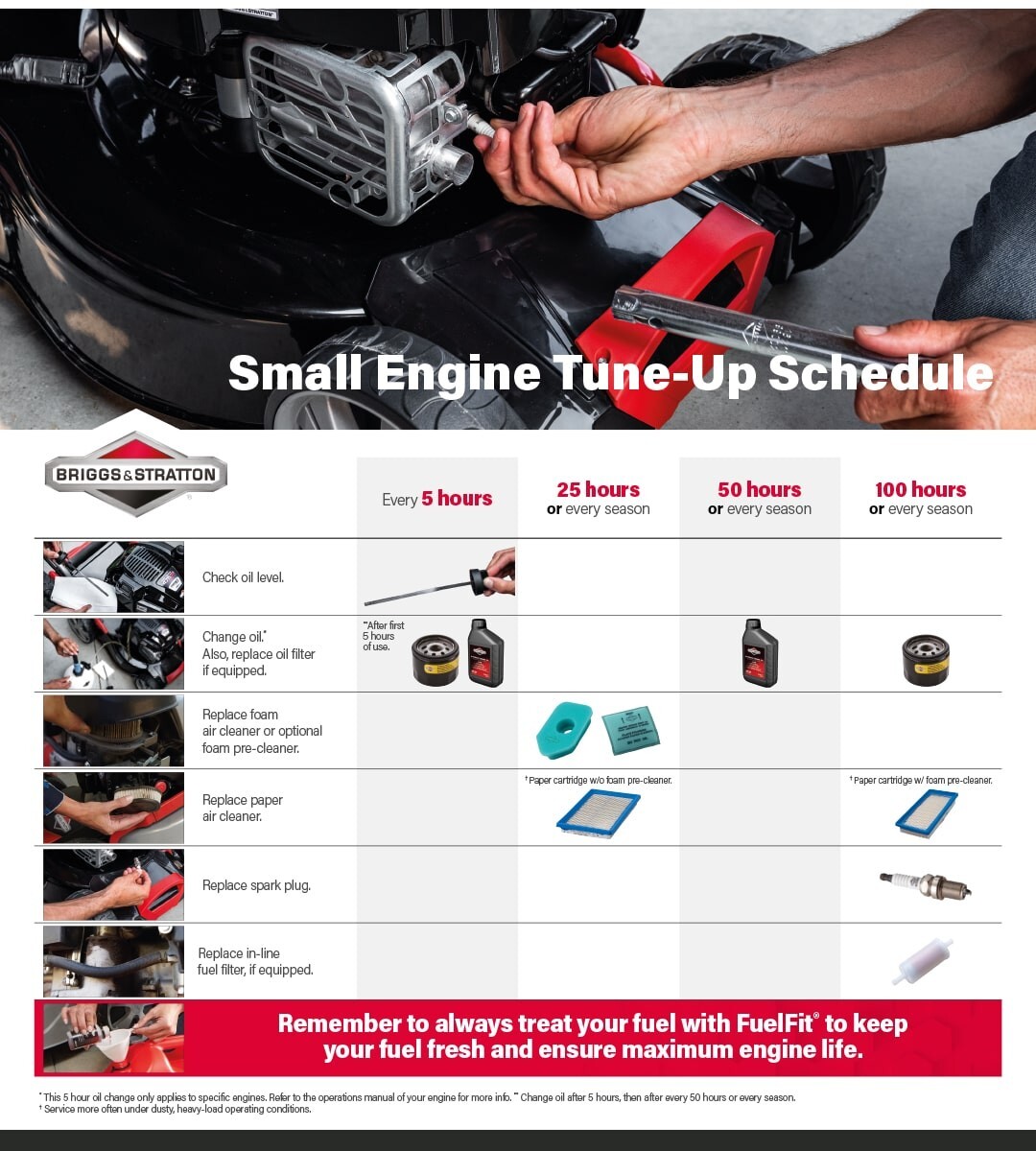
Briggs & Stratton engines use one of three types of air filters: paper, foam, or dual element. An air filter plus a filter cartridge and...

Read More

3 min read

How To Get Healthy Soil & Grow a Beautiful Lawn

The base for a beautiful, healthy lawn is soil. Many homeowners do not consider soil composition as a potential threat to the health of their...

Read More
How to Change Oil

2 min read

How to Change Oil

Steps to Better Engine Maintenance For optimum performance, you should change the oil in your small engine after the first five hours of use and...

Read More