1 min read
How to Clean a Small Engine Carburetor
A big part of ensuring a smooth-running engine is keeping your carburetor and linkages clean and well adjusted. WARNING: Always read the ...
2 min read

Whether you want to know how to replace a flywheel or have questions about inspecting it, find a guide to Briggs & Stratton flywheel key below.
Read through the whole FAQ or jump to the most relevant sections:
What is a small engine’s flywheel?
How do I remove the flywheel key?
How do I check and inspect the flywheel key for replacement?
How do I install my new flywheel?
WARNING: Always read the engine and equipment manual(s) before starting, operating, or servicing your engine or equipment to avoid personal injury or property damage. See an authorized dealer or contact Briggs & Stratton if you are unsure of any procedure or have additional questions.
Find all Engine Safety Warnings
Before getting started, make sure you have the right tools for this small engine repair project:
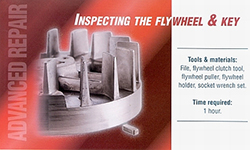
The flywheel on your small engine was originally designed to store the momentum from combustion to keep the crankshaft turning in between the engine's power strokes.
Flywheels on today's small engines serve several other purposes. The fins help cool the engine by distributing air around the engine block. The fins also blow air across the air vane on a pneumatic governor, maintaining the desired engine speed (see "Governor System"). Magnets mounted on the outside surface of the flywheel are required for ignition. On engines with starter motors, lights or other devices, magnets mounted inside and outside are at the heart of the electrical system.
Finally, if a lawn mower or tiller blade hits a rock or curb, the flywheel key can sometimes absorb the damage, reducing repair costs significantly. Always check for damage by removing the flywheel to inspect the key and the keyway, the key's slot on the crankshaft. The soft metal key must eliminate play between the flywheel and crankshaft.
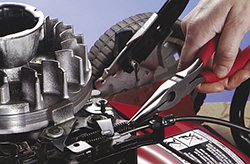
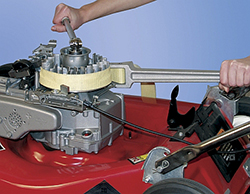
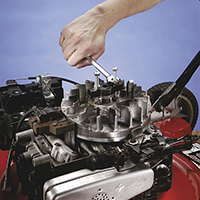
CAUTION! Never strike the flywheel. Even a slightly damaged flywheel presents a safety hazard and must be replaced.
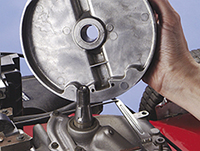
Step 1: Check for cracks on your crankshaft or broken fins. Replace them if you find such damage. The tapered sections must be clean and smooth, with no play between the two.
Step 2: Inspect the keyway and flywheel for damage. Slight burrs may be removed with a file. Then, make certain there is no play or wobbling when the flywheel is placed on the crankshaft.
Step 3: Inspect the flywheel key. If there are any signs of shearing or if you have doubts about its condition, replace it. It's simple and inexpensive.
First, obtain a new flywheel key designed for your make and engine model from your Briggs & Stratton authorized dealers.
Place the flywheel on the crankshaft and look through the flywheel hub to align the keyways on the flywheel and crankshaft.
With the flywheel in place, place the key in the keyway; it should fit securely. If you feel play, check to see if the key is upside down. Debris can also prevent the key from seating in the keyway.
Once the key and flywheel are securely in place, reattach the flywheel nut or clutch. Consult your authorized dealers for the torque specifications for your make and model.
1 min read
A big part of ensuring a smooth-running engine is keeping your carburetor and linkages clean and well adjusted. WARNING: Always read the ...
2 min read
Learning how to check, clean and change a spark plug is a valuable part of your DIY education. Whether you’re doing regular maintenance or...
3 min read
In most walk mowers, a well-maintained brake system should stop the engine and any attached cutting equipment within three seconds...