How to Store and Winterize Outdoor Power Equipment Properly
Briggs & Stratton Encourages Operators to Store Equipment Safely During Winter Months So it Starts Effortlessly in Spring
2 min read
Briggs & Stratton Admin : Updated on January 26, 2026
MILWAUKEE, Wisconsin (November 4, 2016) — Ahead of the frigid winter weather blowing into the country’s cities and neighborhoods, Briggs & Stratton Corporation encourages families to consider investing in a backup power solution to prevent costly damages from frozen pipes and potential dangerous temperatures that can arise when a home’s power goes out in the winter months.
“Many of us tend to take power for granted,” said Dan Roche, director of marketing for portable power and cleaning systems at Briggs & Stratton. “Electricity keeps our lives and homes running almost without notice, but without a backup power solution at the ready, a utility power outage during wintertime can make a family cold and uncomfortable quick. Homeowners should take extra steps ahead of the snow and ice season to navigate the everyday activities that become problematic without power flowing to the home.”
Families that might endure a power outage in the winter months should remember these helpful tips to stay safe and comfortable:
BEFORE THE STORM:
DURING / AFTER THE STORM:
“Having a backup power solution ready ahead of a utility power outage prevents most of the headaches that go with living without power. With backup power, families won’t necessarily need to worry about potentially dangerous temperatures, for example,” said Melissa Thomas, marketing assistant manager, Briggs & Stratton Standby power. “This gives families the security they desire to comfortably ride out long winter months.”
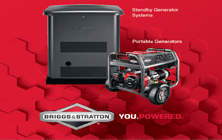
The most popular backup power solutions are portable generators and permanently-installed standby generator systems. Both types of backup power can keep a home’s lights, the furnace and necessary appliances working in the event of a weather-related power outage or other emergency. Understanding the differences and capabilities between the two options makes selecting the best generator for a family’s needs much easier.
Portable generators: The immediate backup power supply
Portable generators are generally low maintenance, compact and easily maneuverable on the property. These units are typically powered by gasoline and work well as an immediate solution* during a power outage. Additionally, they are designed to provide reliable electricity to a few essential items and appliances such as a refrigerator, basic light circuits and portable electric heaters at the same time.
While portable generators can provide users with flexibility and comfort, they need to be used appropriately at all times in order to avoid carbon monoxide poisoning. Never run a portable generator inside a home or in a garage. As a member of the Portable Generator Manufacturers’ Association, Briggs & Stratton invites homeowners to visit www.TakeYourGeneratorOutside.com to learn more about portable generator safety.
Standby generator systems: The high-wattage backup power supply
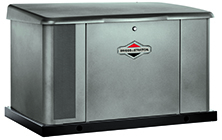
Families who want a backup power source that offers uninterrupted power should opt for a home standby generator system. Home standby generators need to be professionally installed, so homeowners should allow time for the installation process and associated costs. These home generators are connected to the existing propane or natural gas line of a house. When utility power to a house is interrupted, the home generator automatically turns on within seconds. Home standby generators can power more of a home’s high-wattage appliances, like the furnace, electric water heater, stove and clothes dryer.
Homeowners interested in finding the right backup power solution for their family can visit www.briggsandstratton.com. There they can navigate the decision-making process with the help of a side-by-side comparison.
*If connecting a portable generator into your home electrical system, have a licensed electrician install an Emergency Manual Power Transfer System.
Media Contact:
Liz Dorland
Office: (402)-437-6066
Lizd@swansonrussell.com
Briggs & Stratton Encourages Operators to Store Equipment Safely During Winter Months So it Starts Effortlessly in Spring
Briggs & Stratton is Proud to be a Title Sponsor for 23 Years
Line of Standby Generators are Corrosion-Resistant and Can Handle Winds up to 175 MPH